The Odyssey Retold
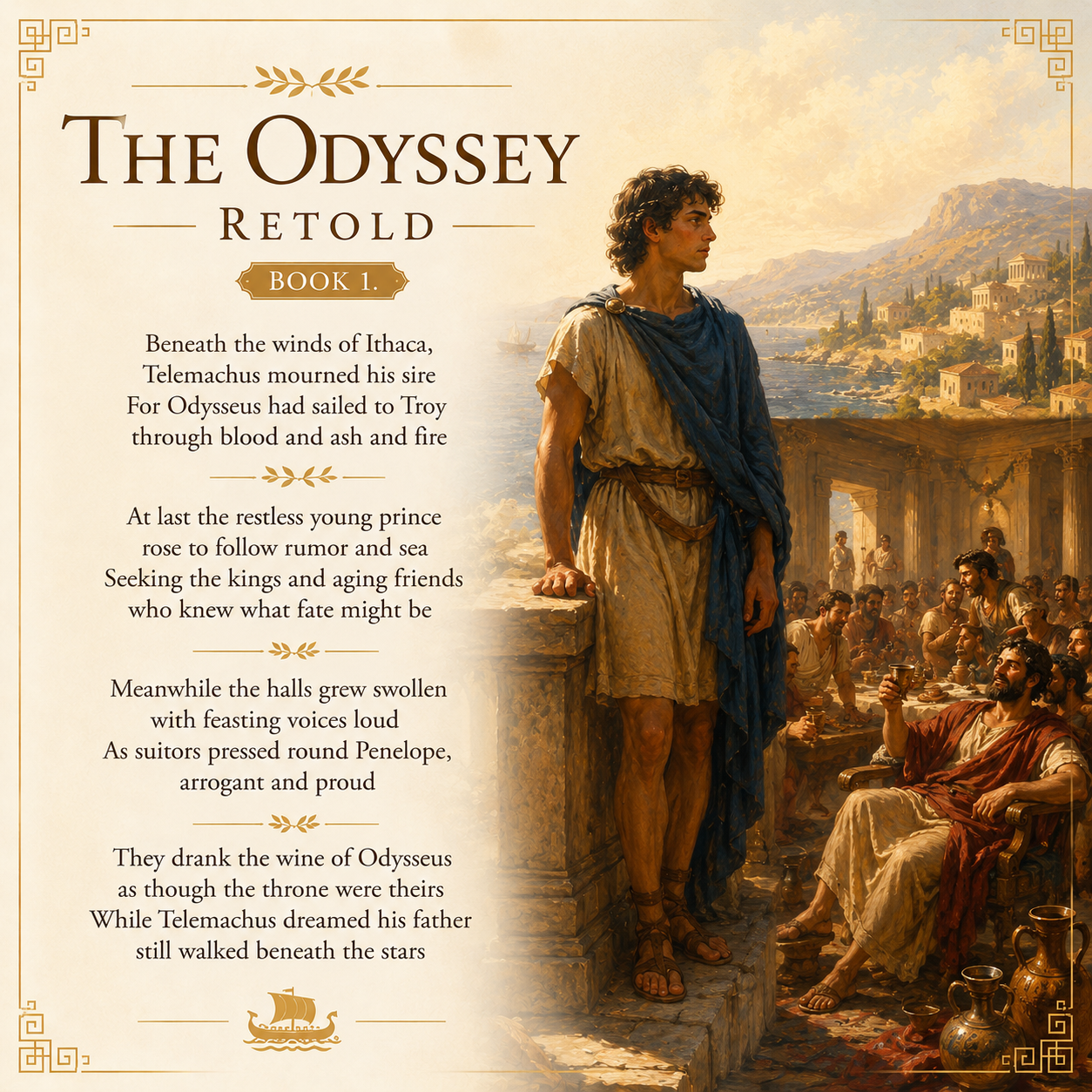
Book one of The Odyssey Retold
In the retold Odyssey, the story of Penelope and the suitors symbolizes ultimate loyalty, cunning perseverance, and the triumph of just order over chaos. It represents the psychological and moral ordeal of holding fast to one's values despite immense pressure to surrender
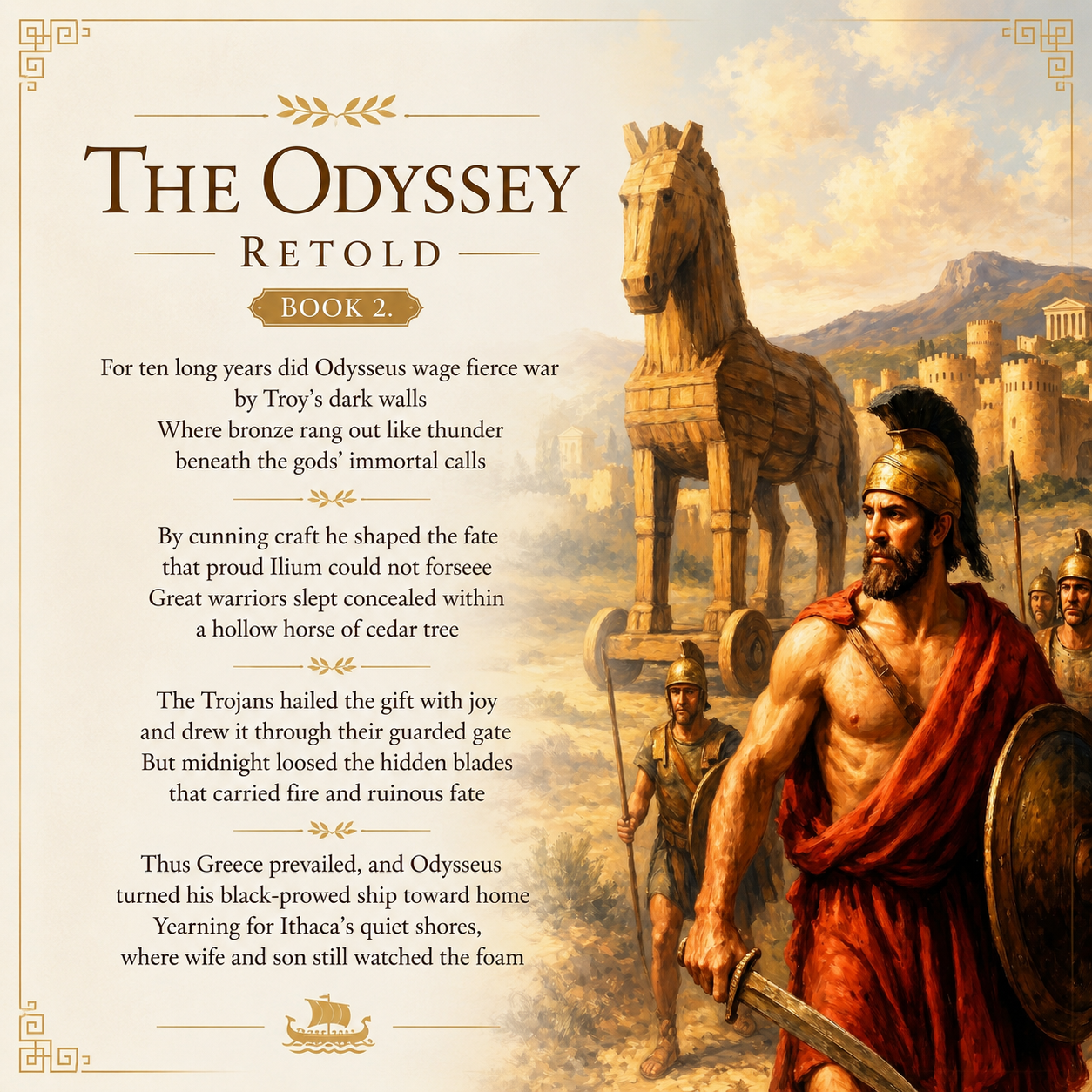
Book two of The Odyssey Retold
In Troy, Odysseus was the ultimate strategist of the Trojan War. The king of Ithaca used his legendary intelligence to recruit important warriors such as Achilles, advised the Greek leaders, and ultimately orchestrated the outcome of the war by designing the Trojan Horse, which allowed the Greeks to infiltrate and plunder the city.
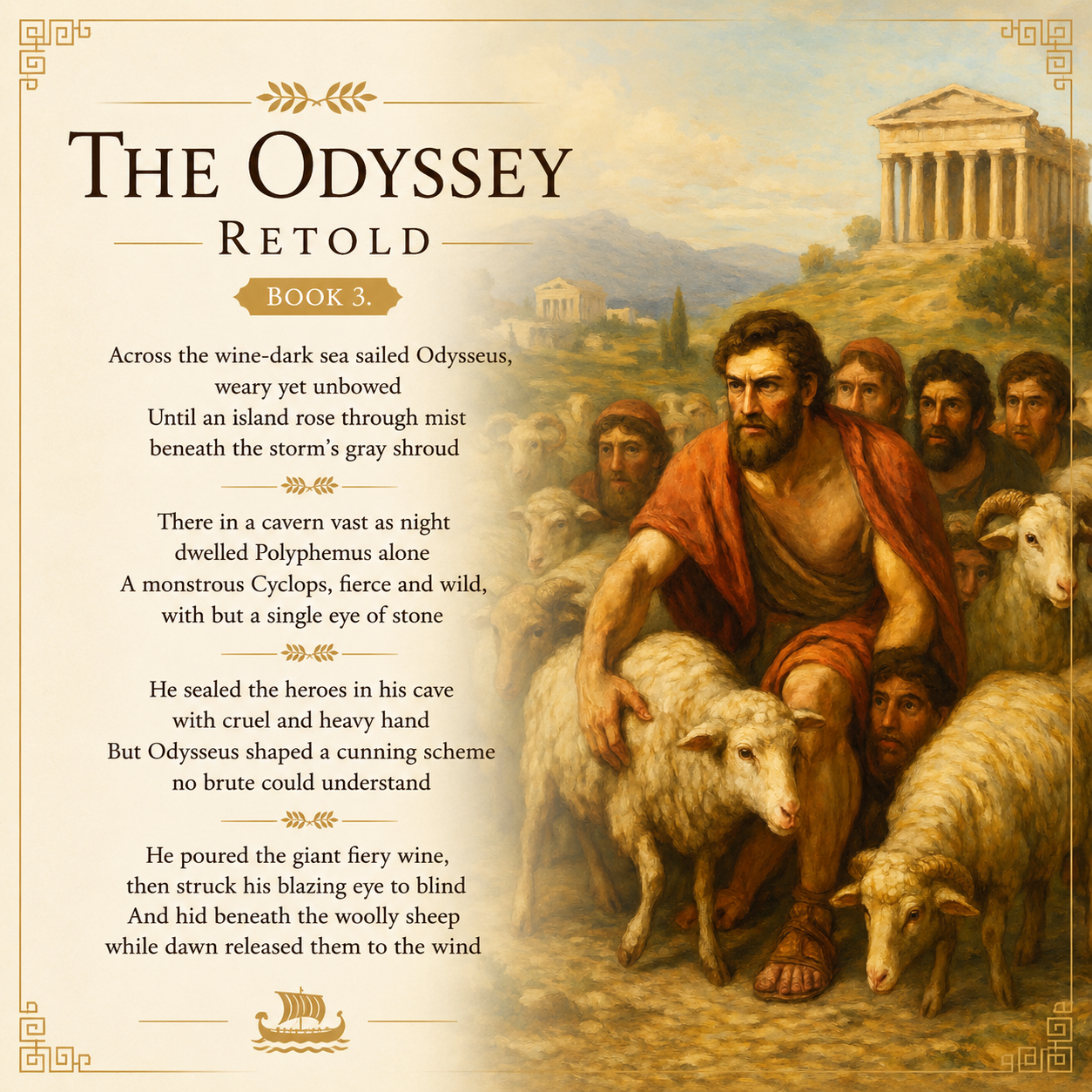
Book three of The Odyssey Retold
Odysseus escapes the Cyclops Polyphemus through a brilliant combination of trickery and cunning. After getting the giant drunk on wine, he blinds the monster with a heated wooden stake. The next morning, Odysseus and his survivors escape by clinging to the undersides of the Cyclops' sheep, which are being let out to graze.
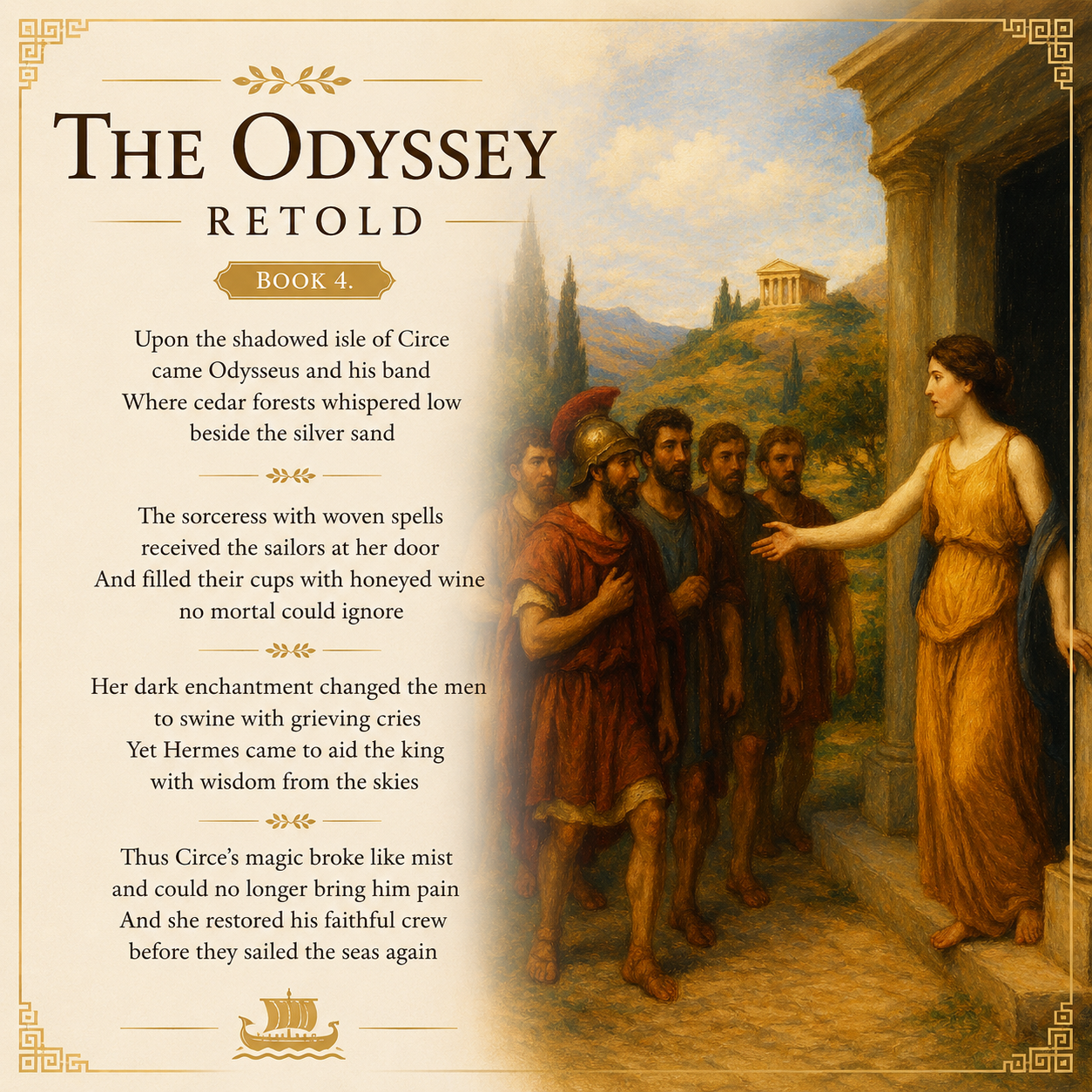
Book four of The Odyssey Retold
Circe is described as the daughter of the sun god Helios and the Oceanid Perse. Circe was known for her extensive knowledge of potions and herbs.
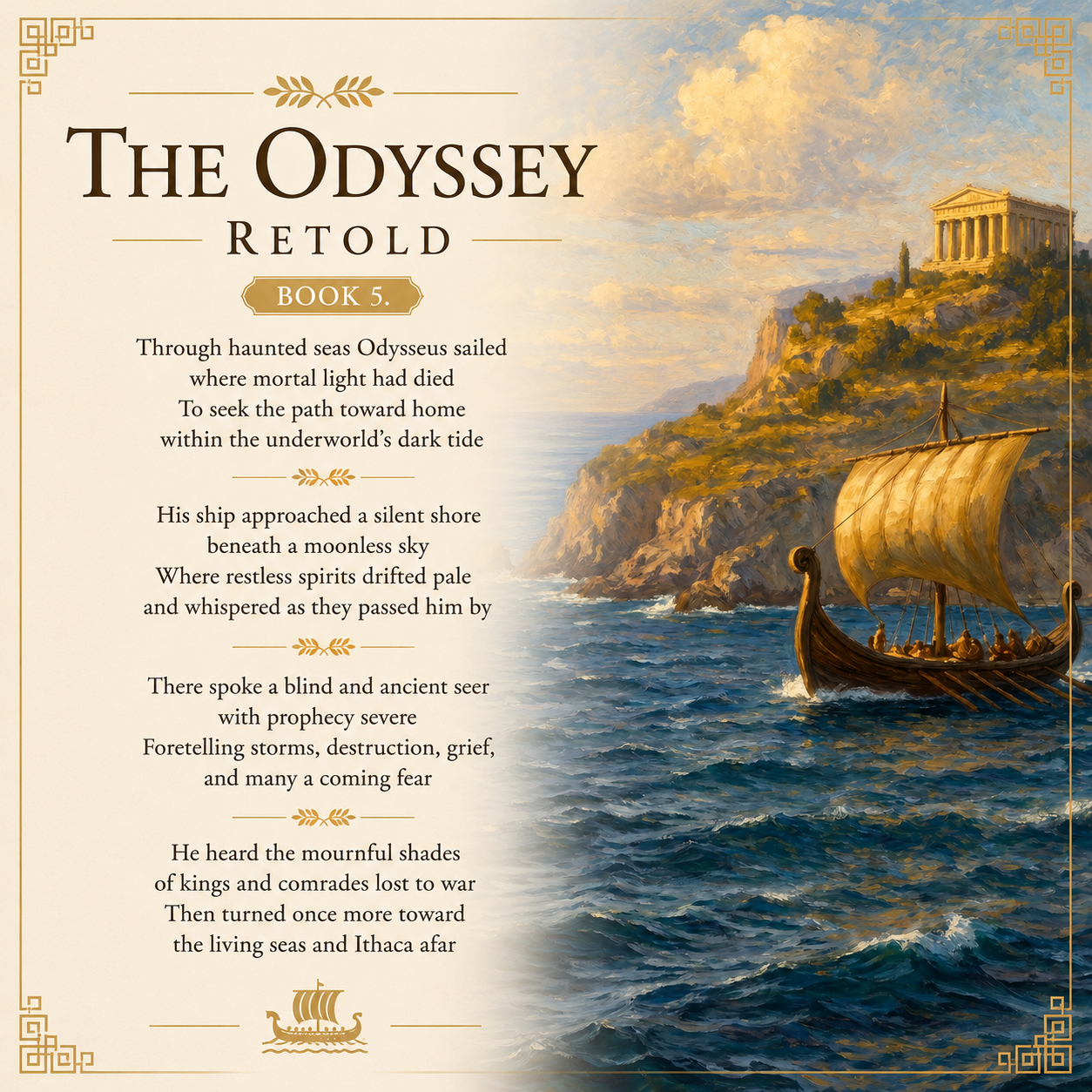
Book five of The Odyssey Retold
Odysseus's journey to Hades, the underworld, is one of the most famous examples in literature of katabasis: a heroic descent into the realm of the dead.
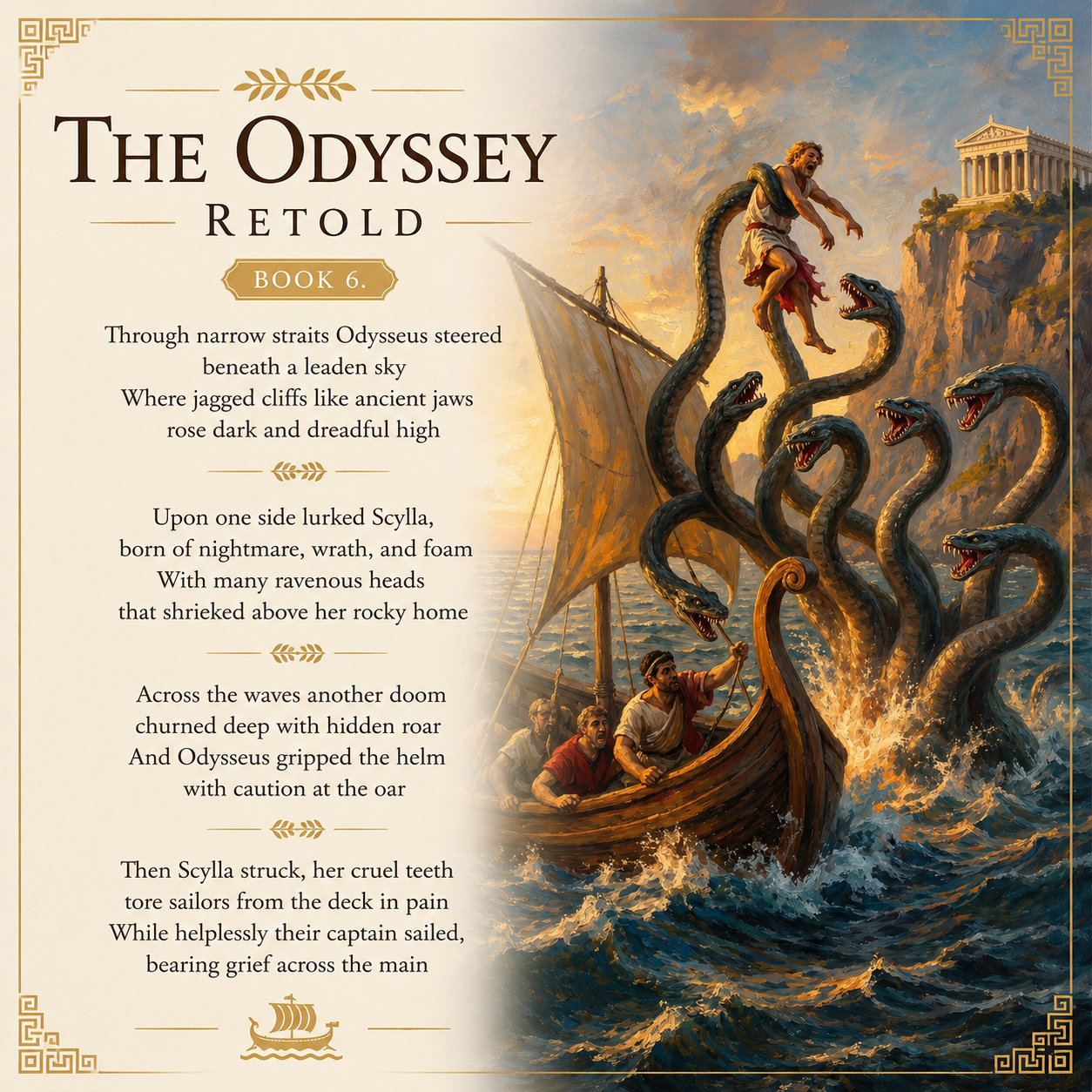
Book six of The Odyssey Retold
Scylla is a legendary, man-eating monster that lives on one side of a narrow water channel, opposite her counterpart, the sea-devouring monster Charybdis.
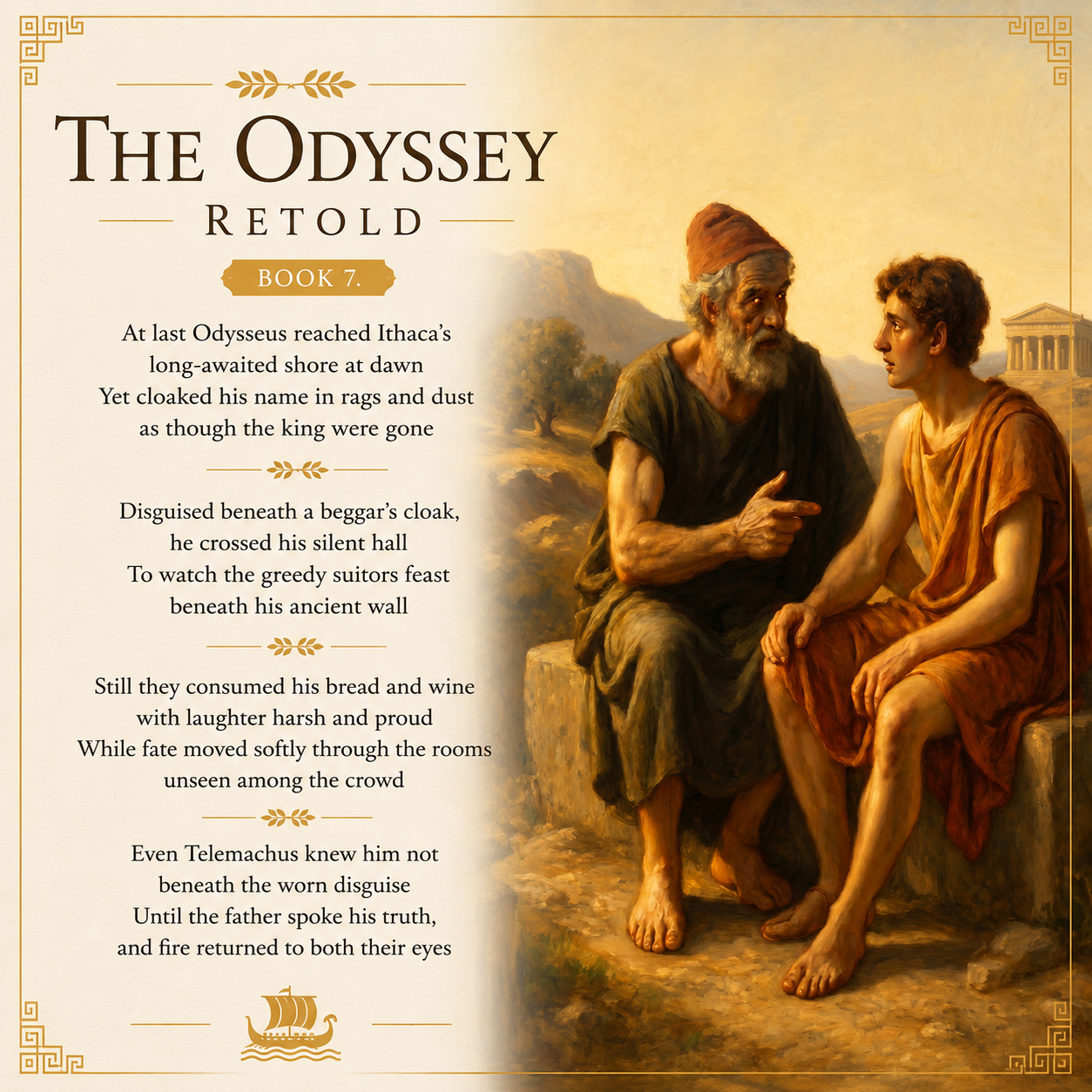
Book seven of The Odyssey Retold
Telemachus (Distant Warrior) is the son of Odysseus and Penelope in Greek mythology and a central character in The Odyssey Retold.
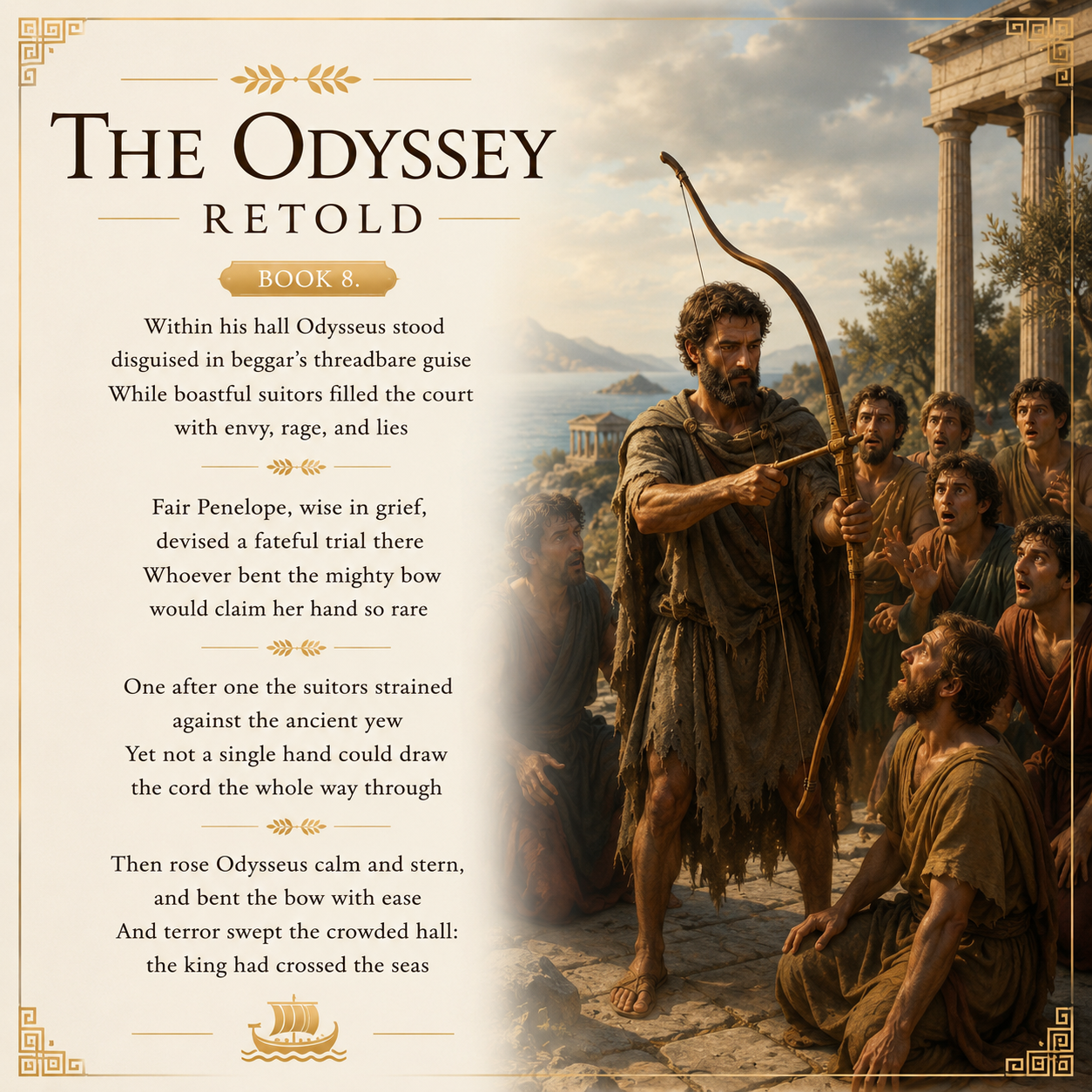
Book eight of The Odyssey Retold
In The Odyssey Retold, Penelope proposes an archery contest to buy time and ultimately choose a new husband from among her unruly suitors.
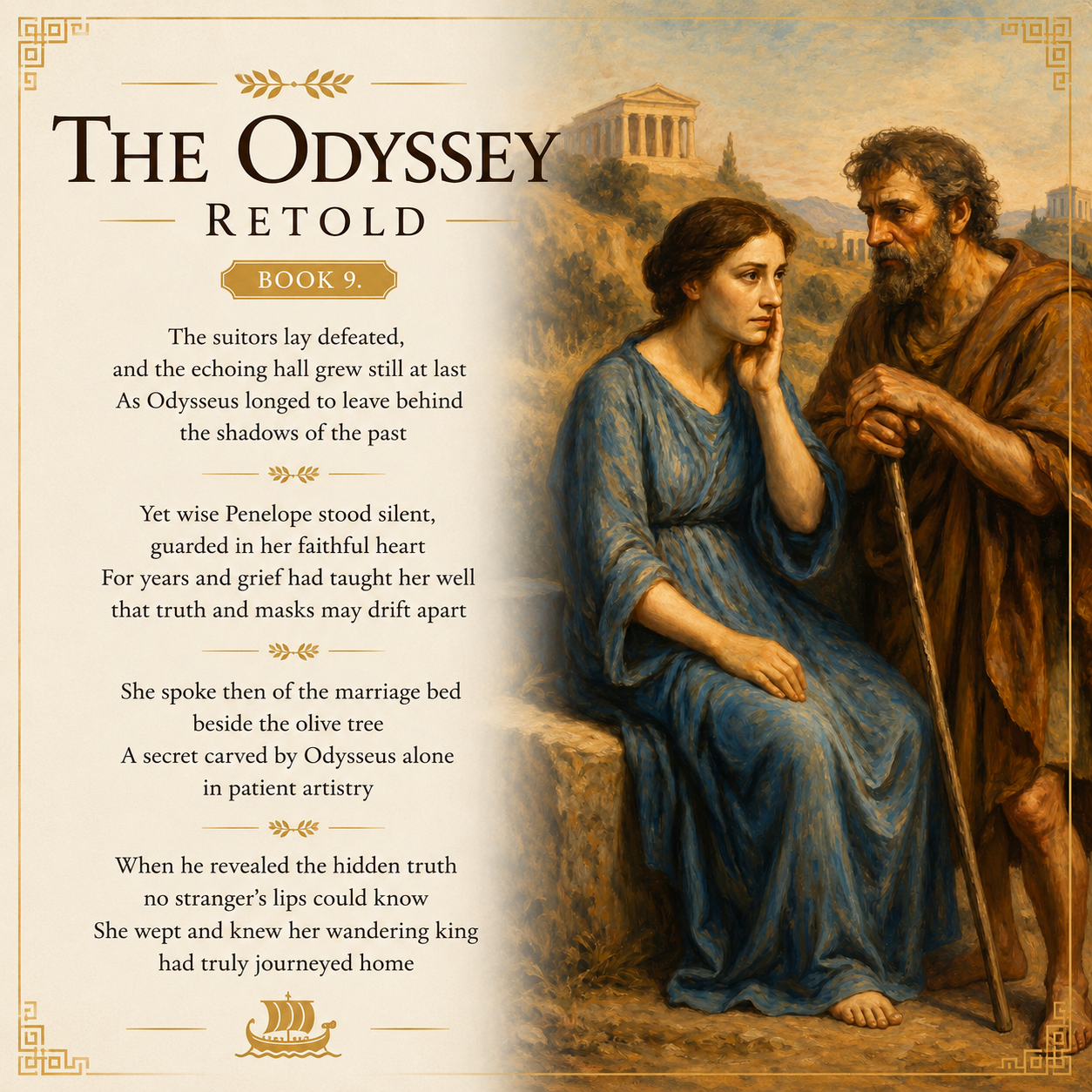
Book nine of The Odyssey Retold
Odysseus himself had made the corner post of that bed from the trunk of a living olive tree, around which they had built their house.